Best Third Party Pharma Manufacturers

Best Amoxy Clav Manufacturer in India
January 28, 2026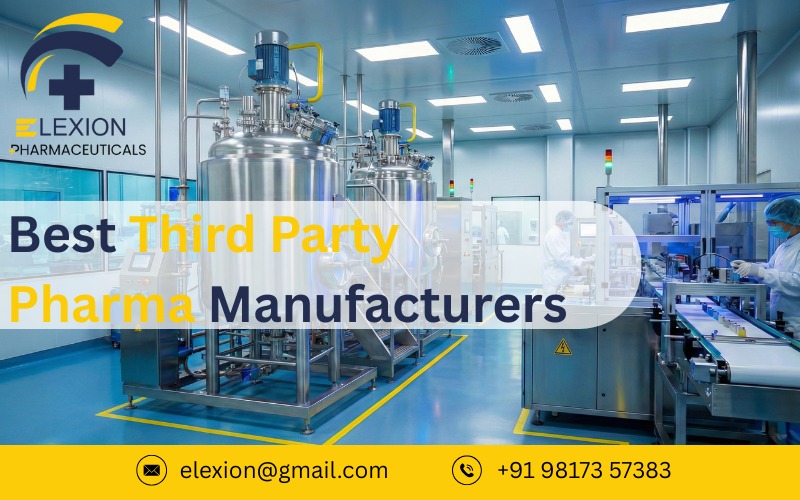
In the rapidly evolving landscape of the global healthcare industry, strategic agility is no longer a luxury—it is a necessity. Pharmaceutical companies, ranging from agile startups to multinational giants, are constantly seeking ways to optimize their supply chains, reduce overhead costs, and accelerate time-to-market for life-saving medications. This search for efficiency has led to the explosive growth of a specific business model: Pharma third party manufacturing.
By outsourcing production to specialized partners, brands can focus on their core competencies—research, marketing, and distribution—while leaving the complex machinery of production to the experts. In this comprehensive guide, we will explore the depths of third-party manufacturing, why it is the backbone of modern pharma, and how reliable names like Elexion Pharmaceuticals are redefining what it means to be a manufacturing partner.
What is Pharma Third Party Manufacturing?
At its core, Pharma third party manufacturing (often referred to as contract manufacturing) is a business arrangement where a pharmaceutical company hires a qualified third-party facility to manufacture its products under its own brand name.
Think of it as a strategic delegation. You own the brand, the marketing rights, and the formula intellectual property, but you do not own the factory, the heavy machinery, or the headache of daily plant maintenance. Instead, a specialized manufacturer produces the goods according to your exact specifications.
The Shift from In-House to Outsourcing
Historically, pharmaceutical companies believed in vertical integration—owning every step of the process from the lab bench to the pharmacy shelf. However, the rising costs of maintaining GMP-certified facilities and the increasing complexity of regulatory compliance have shifted this paradigm. Today, the question isn’t “Should we manufacture this ourselves?” but rather “Who is the best partner to manufacture this for us?”
This is where the distinction in quality becomes evident. When a reliable partner in Pharma third party manufactures drugs, they aren’t just filling bottles; they are ensuring that every tablet, capsule, and syrup meets stringent global safety standards.
Key Benefits of Third Party Manufacturing
Why are so many companies pivoting to this model? The advantages are multifaceted, impacting everything from the balance sheet to brand reputation.
1. Cost-Effectiveness and Capital Preservation
Building a pharmaceutical manufacturing plant is a massive financial undertaking. It requires acres of land, expensive machinery, advanced HVAC systems for clean rooms, and a dedicated workforce of chemists and engineers. By opting for third-party manufacturing, companies avoid these massive capital expenditures (CAPEX).
- Reduced Operational Costs: You save on labor, utilities, and maintenance.
- No Depreciation: You don’t carry depreciating assets like machinery on your books.
- Working Capital Efficiency: Funds can be redirected toward marketing campaigns and R&D.
2. Access to Specialized Expertise
Manufacturing is a skill set distinct from marketing. A dedicated manufacturer lives and breathes production efficiency. They are up-to-date with the latest filtration technologies, compression techniques, and sterilization methods. Companies like Elexion Pharmaceuticals position themselves in this space to offer expertise that a marketing-focused pharma company might lack. When you partner with experts, you are essentially “renting” their years of technical experience.
3. Focus on Core Competencies
For many pharma entrepreneurs, their passion lies in healing patients and building a brand, not in managing shift rosters for factory workers. Outsourcing allows leadership to focus on:
- Brand Building: Creating a strong market presence.
- Sales Network: Expanding distribution channels to chemists and hospitals.
- R&D: Developing new formulations to address unmet medical needs.
4. Scalability and Flexibility
Market demand is rarely static. Flu seasons, new disease outbreaks, or successful marketing campaigns can cause demand to spike unexpectedly. If you own your own factory, scaling up production takes months of hiring and machine installation. A third-party manufacturer, however, often has multiple lines and excess capacity. They can scale up production to meet your surge in demand or scale down during lean periods without burdening you with idle machinery costs.
The Process: How Pharma Third Party Manufacturing Works
Understanding the workflow is crucial for any business owner looking to enter this sector. It is a systematic journey from concept to finished product.
Step 1: Partner Selection
This is the most critical phase. You must evaluate potential manufacturers based on their certifications (WHO-GMP, ISO), production capacity, and reputation. It is essential to look for partners who share your commitment to quality.
Step 2: Quotation and Agreement
Once a shortlist is ready, you request a quotation. This document details the cost of raw materials (API), packaging materials, and conversion charges (the cost of manufacturing). After negotiation, a Manufacturing Agreement is signed. This legal contract defines liabilities, quality standards, and delivery timelines.
Step 3: Formulation and Approval
Before mass production begins, the formulation is finalized. If it is a new drug, trial batches are produced and tested for stability. This is where the technical prowess of the manufacturer shines. When a competent Pharma third party manufactures a test batch, they are meticulously checking for dissolution rates, friability, and chemical stability.
Step 4: Procurement of Materials
The manufacturer procures the Active Pharmaceutical Ingredients (APIs) and excipients. Simultaneously, the brand owner (you) or the manufacturer arranges for packaging materials—boxes, labels, and foils—that carry your brand’s design and logo.
Step 5: Manufacturing and Quality Control (QC)
The actual production takes place in clean-room environments.
- Granulation & Compression: For tablets.
- Mixing & Filling: For syrups and liquids.
- Sterile Filling: For injectables. Throughout this process, In-Process Quality Checks (IPQC) are conducted.
Step 6: Final Packaging and Dispatch
The medicines are packed into blisters, strips, or bottles, then placed into outer cartons. A final Quality Assurance (QA) check ensures the batch meets all specifications before it is released for dispatch to your warehouse.
The Role of Elexion Pharmaceuticals in the Industry
In a crowded marketplace, specific names stand out due to their commitment to reliability and service. Elexion Pharmaceuticals represents the new wave of industry players who understand that manufacturing is a partnership, not just a transaction.
While many generic manufacturers operate as silent factories, forward-thinking entities like Elexion Pharmaceuticals are increasingly viewed as strategic allies. For a pharmaceutical marketing company, the reliability of supply is paramount. If a manufacturer delays a batch, the chemist shelves go empty, and patients switch to a competitor.
Choosing a partner similar to Elexion Pharmaceuticals ensures that the communication lines remain open. Whether it is a query about a batch status or a request for a slight modification in packaging design, responsiveness is key. In the context of the Indian and global market, where supply chain disruptions can happen, having a localized, dependable partner provides a safety net that allows business owners to sleep soundly.
Furthermore, as regulatory landscapes tighten, companies need partners who are proactive about compliance. When Elexion Pharmaceuticals or similar high-standard entities are involved, there is an implicit assurance that the documentation—from batch manufacturing records (BMR) to certificate of analysis (COA)—will be flawless.
Challenges in Third Party Manufacturing and How to Overcome Them
No business model is without its risks. However, awareness is the first step toward mitigation.
1. Quality Consistency
Risk: If the manufacturer cuts corners on raw materials, your brand reputation suffers. Solution: Regular audits. Do not just sign a contract and walk away. Visit the facility where Pharma third party manufactures your goods. Ensure Elexion Pharmaceuticals (or your chosen partner) maintains the same high standards for every batch, not just the first one.
2. Intellectual Property (IP) Concerns
Risk: Fear of your unique formulation being leaked. Solution: robust Non-Disclosure Agreements (NDAs). Legitimate partners respect IP as the foundation of their business relationship.
3. Supply Chain Delays
Risk: Shortage of APIs leading to production halts. Solution: Forecast planning. Work closely with your manufacturer to predict demand 3-6 months in advance.
Future Trends: The Road to 2030
The domain of Pharma third party manufactures is undergoing a technological renaissance. Here is what the future holds:
Automation and AI in Manufacturing
We are seeing the integration of automated visual inspection systems that can detect micro-cracks in tablets faster than the human eye. While the manufacturing is outsourced, the data is becoming shared. Brands will soon have real-time access to production dashboards.
Rise of Nutraceuticals and Herbal Products
There is a massive surge in demand for immunity boosters and dietary supplements. Manufacturers are adapting their lines to handle herbal formulations, which require different processing techniques compared to synthetic drugs. Companies that can pivot between drug and supplement manufacturing will be the most valuable partners.
Sustainable Manufacturing
Green chemistry is becoming a priority. Third-party manufacturers are investing in solar power, water recycling plants, and eco-friendly packaging solutions to attract environmentally conscious brands.
Why Branding Matters: The Elexion Example
In the B2B pharmaceutical space, your reputation is your currency. A company like Elexion Pharmaceuticals builds its standing not just on the machinery it accesses, but on the trust it generates. When you choose a manufacturing partner, you are entrusting them with your brand’s promise to the patient.
For marketing executives and procurement managers, the name on the manufacturing license is a badge of quality. As you scale your pharmaceutical business, aligning with a name that resonates with stability—like the alignment seen with Elexion Pharmaceuticals—can be a subtle but powerful differentiator in a competitive market.
Conclusion
The pharmaceutical industry is at a crossroads. The demand for high-quality, affordable medicines is higher than ever, but so is the cost of production. Pharma third party manufacturing offers the perfect bridge between these two realities. It allows companies to be agile, cost-effective, and quality-obsessed without the burden of heavy infrastructure.